
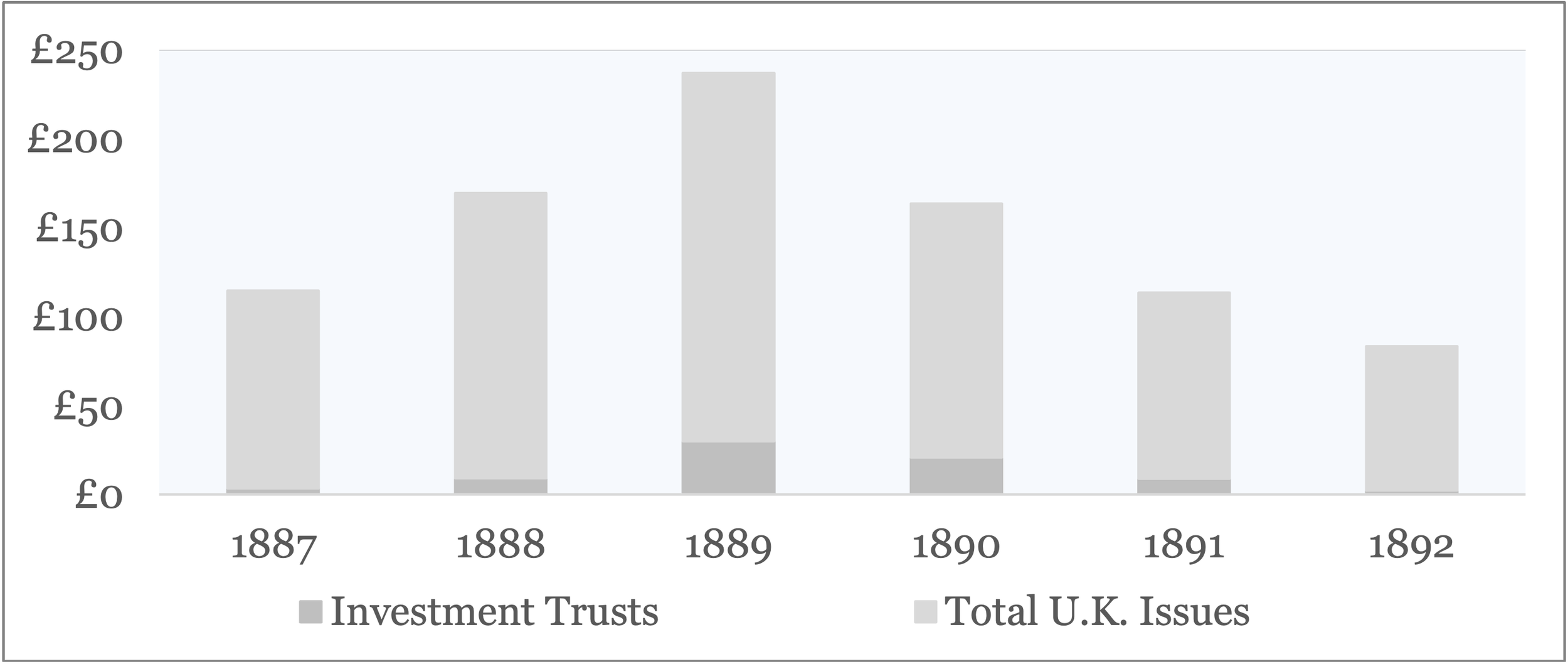
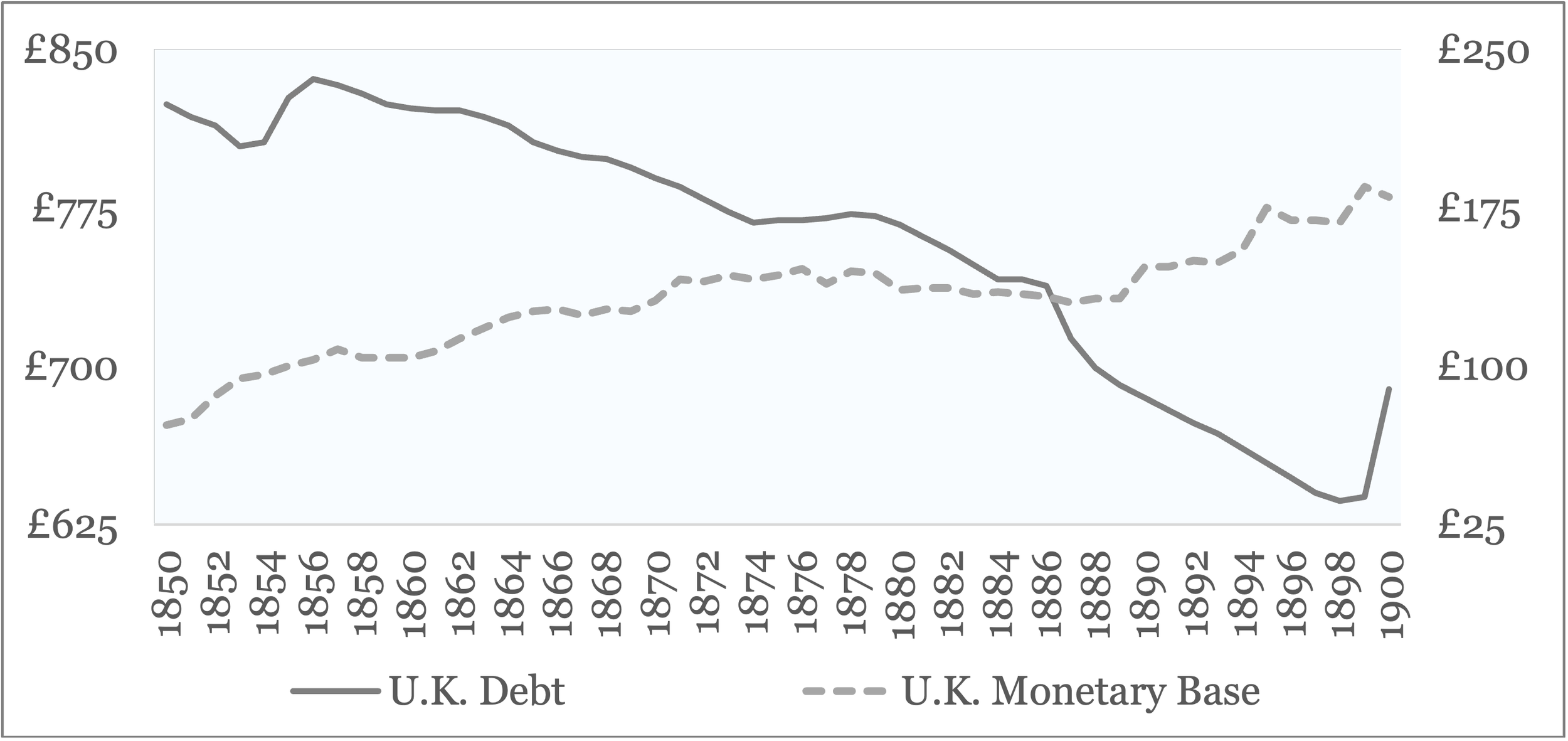
The Baring Crisis (1890) followed a boom in the new issues market on the London Stock Exchange (LSE) that was facilitated by a material reduction in the U.K. National Debt, which fell 10% (from £761 million to £685 million) in the decade to 1890, and the Conversion Act (1888) that caused the yields on U.K. consols to decline from 3.00% to 2.75%.[1] Accordingly, the increase in the supply of investable funds and reduction in the long-term rate was met with a proliferation of new issues on the LSE. Per Figure 1, the volume of new capital issues soared from £111 million in 1887 to £207 million in 1889, before softening to £143 million in 1890, when market tumult upended the storied investment house of Baring Brothers & Co.
Figure 1. New Capital Issues on the London Stock Exchange, 1887-1892
Source: SEC, Investment Trusts & Investment Companies: Investment Trusts in Great Britain (U.S. Government Printing Office, 1939), 3.
Across this period, the speculative element was concentrated in Argentine bonds that captured £65 million, or 17.8% of total capital issues during 1888 and 1889, as well as in investment trusts that accounted for 11.7% of the total.[2] Introduced to the U.K. in 1863, investment trusts were broadly marketed to middle-class investors. Having reached 25 in number by 1886, the LSE added 32 investment trusts with a combined capital of £64 million between 1887 and 1890, when the mania took hold.[3] Stressing that the entities had “followed so fast upon each other’s heels that they have experienced great difficulty in purchasing proper investments,” The Economist warned in April 1889 that, “the supply of really sound securities is in many directions so very limited that any decided increase in the demand at once causes a considerable advance in prices.”[4]
Having been taken to the extreme, the abundant volume of new offerings manifested in a saturated marketplace. As Max Wirth (1891) observed, “the securities offered were not taken up by the public to any great extent, and the issuing houses and their friends who had foolishly underwritten the loans were obliged to find the money for them by selling other securities.”[5] Among others, de Murietta & Co., J.S. Morgan & Co., Stern Bros., Morton, Rose & Co., and L. Cohen & Sons were burdened with unsold securities. However, no institution was as wanting as Baring Brothers & Co., which was encumbered with £4.6 million of unsold Argentine bonds against a capital base of £4.0 million.[6]
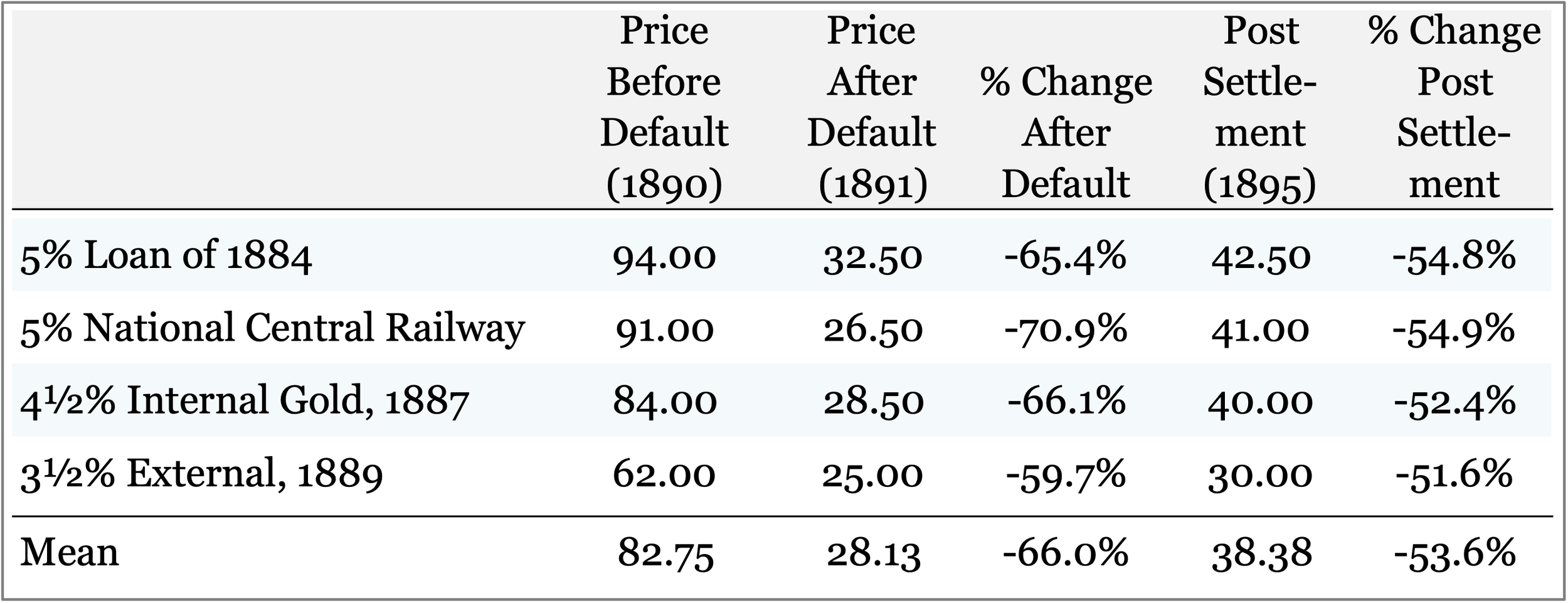
Figure 2. Prices of U.K. Loans Issued to Argentine Nationals
Source: R.M. Boeckel, “Defaulted Foreign Bonds,” Editorial Research Reports (1932), vol. 1.
Amidst a tightening in the Bank of England discount rate, which was raised from 3.00% to 5.00% in the 5 months from June 1890, the rupture at Baring Brothers emerged from a routine, albeit sizable, withdrawal by the Russian Government that authorized a £5 million transfer in November 1890.[7] Unable to meet the request because its capital was lodged in securities intended for resale, Baring Brothers & Co. sought a rescue package from the Bank of England. Modeled after the lifeboat arranged by the Banque de France in its rescue of the Comptoir d'Escompte in March 1888, the scheme devised by the Bank of England placed the firm's holdings of Argentine bonds and other slow-to-liquidate assets in a "bad bank" that was backed by a 4-year guarantee fund of £17.1 million – subscribed by the City's leading institutions – against which the central bank advanced £7.5 million.[8] With claims met in part by the liquidation of the personal fortunes of certain partners, including Edward Baring, Lord Revelstoke, what remained of the aggregate liabilities of £30.2 million was recapitalized as Baring Brothers & Co. Ltd., which reduced the figure to £4.6 million in March 1893, when the reorganized entity showed a surplus of £0.4 million.[9] Meanwhile, the Bank of England maintained a loss of approximately £2.0 million in 1894.[10]
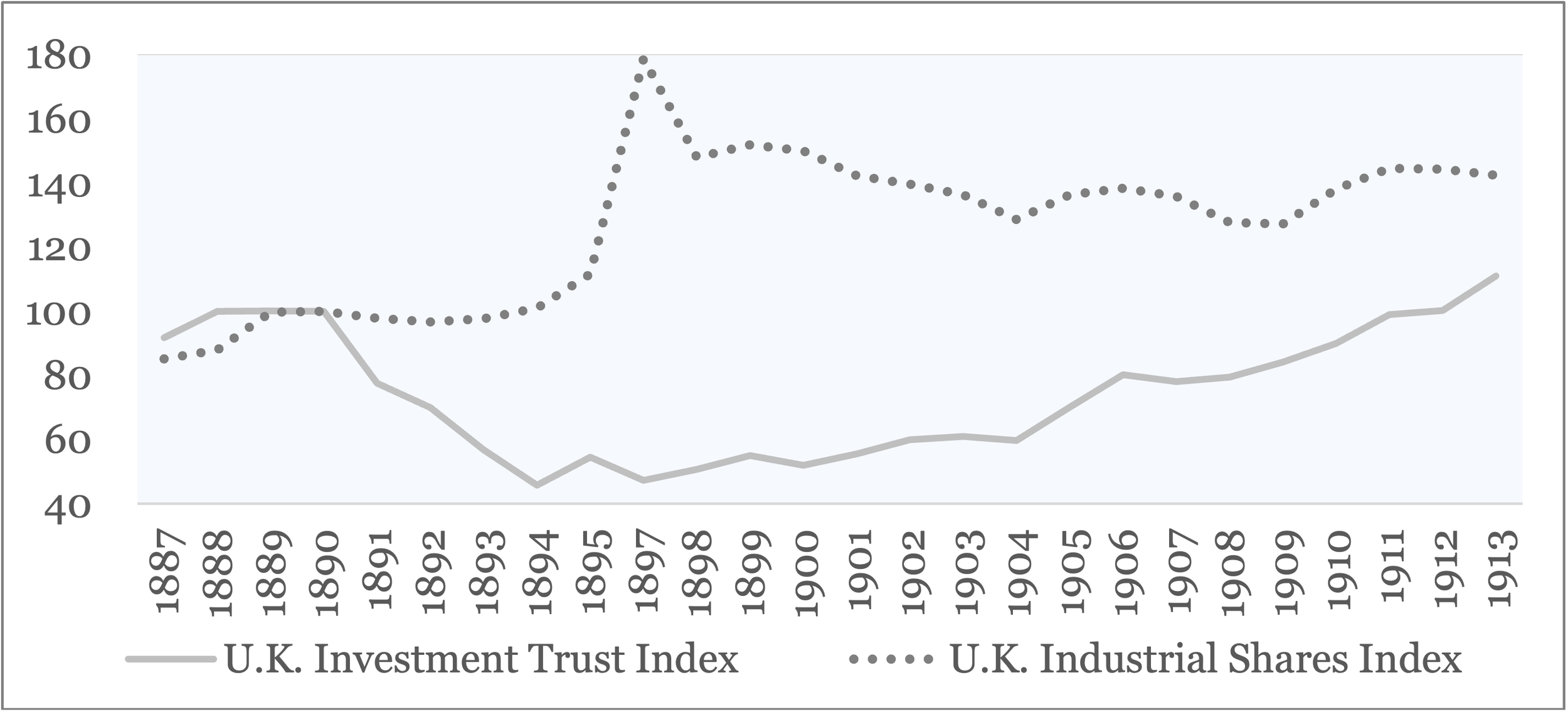
Figure 3. U.K. Investment Trust & Industrial Indexes (1887-1913)
Source: SEC, Investment Trusts & Investment Companies: Investment Trusts in Great Britain (1939), 2.
Of course, U.K. households holding Argentine bonds and the shares of investment trusts suffered the greatest. Per Figure 2, the prices of select Argentine bonds issued by U.K. investment houses traded down, on average, by 66.0% after the government default in 1891. Meanwhile, after gaining just 9.0% in prior years, the U.K. Investment Trust Index (see Figure 3) plunged 54.2% in the period to 1894, when revelations of unsound selling practices and nefarious dealings forced the asset management sector into a formative period of retrenchment.[11] As The Economist observed in 1893: “Having sown the wind, they (the trusts) are now reaping the whirlwind.”[12] While the fallout was contained in the U.K., the impact on foreign holdings in London was severe, as “an irresistible movement to unload such securities and transfer European capital to home investments” took hold.[13] The withdrawal of capital was felt immediately in South Africa, where the shares of miners were placed under intense pressure, before “business paralysis” appeared in Australia.[14] Lastly, an “afterclap” was then felt in the U.S., where the repatriation of foreign funds contributed directly to the Panic of 1893.[15] Having peaked at 38.98 in May 1890, the DJIA would not breach the same level until August 1897.
While remembered as an early example of central bank intervention, if not for the restructuring of a leading investment house, the Baring Crisis is best understood as the culmination of a boom in the new issues market that was spurred by an abundance of reinvestable capital. Indeed, one struggles to grasp the overextension at the long-standing institution until the competitive environment among underwriters is brought to the forefront. Sponsored by a litany of upstart investment houses, the sudden multiplying of investment trusts, which marked nothing less than the birth of asset management the world over, not only competed directly with the offerings brought to market by Baring Brothers & Co but also lowered the lending standards by underwriting shares that augmented supply still further. In other words, while Baring Brothers & Co. was the largest to get caught flat-footed, it was hardly the only bad actor during the upswing.
After the culling of the poorest performers, it bears mention that investment trusts, as an asset class, enjoyed superior returns during the Panic of 1907. Yet, whatever lessons were learned in the U.K., the wisdom was not widely shared in the U.S., where a mania in investment trusts contributed directly to the Great Crash of 1929.[16] As it was, investment trusts occupied 50% of stock volumes in September 1929. Relatedly, the episode is demonstrative not only of the central role played by underwriters in every financial crisis on record, but also of the overemphasis placed by scholars on the panic phase and, conversely, on the ill-attention paid to boom periods, when crises are routinely borne. For those unwilling to observe, it is the blind spot.
Charles Lister Smith, PhD
July 28, 2026
Figure A1. U.K. National Debt vs. Monetary Base
Source: Federal Reserve Bank of St. Louis.
[1] Lawrence M. Speaker, The Investment Trust, (A.W. Shaw Co., 1924), 13; Charles A. Conant, A History of Modern Banks of Issue, 5th ed. (G. P. Putnam’s Sons, 1915), 662. See Figure A1.
[2] Charles A. Conant, A History of Modern Banks of Issue, 662.
[3] SEC, Investment Trusts and Investment Companies: Investment Trusts in Great Britain (U.S. Government Printing Office, 1939), 2.
[4] Paul C. Cabot, “The Investment Trust,” The Atlantic Monthly (March 1929), 401. https://www.theatlantic.com/magazine/archive/1929/03/the-investment-trust/649633.
[5] Max Wirth, “The Crises of 1890,” The Economic Journal, vol. 1, No. 1 (1891), 193. https://www.jstor.org/stable/2955850.
[6] Eugene N. White, "Censored Success: How to Prevent a Banking Panic, the Baring Crisis of 1890 Revisited" (working paper, Rutgers University and NBER, January 2018), 10.
[7] W.R. Lawson, “An Averted Crash in the City,” Fortnightly Review (December 1890), vol. 48, no. 288, 941.
[8] Eugene N. White, "Rescuing a SIFI, Halting a Panic: The Baring Crisis of 1890," Bank Underground (blog), Bank of England, February 10, 2016, https://bankunderground.co.uk/2016/02/10/rescuing-a-sifi-halting-a-panic-the-Baring-crisis-of-1890/.
[9] Conant, History of Modern Banks of Issue, 666.
[10] Eugene N. White, "Censored Success,” 31.
[11] Among other violations, Paul Cabot (1929, 401-02) points to the Anglo-American Debenture Company that created 13 separate but interconnected trusts that were utilized to manipulate accounts and sustain the general rise in prices, as well as Murietta and Co. that acquired 12,000 shares in the Imperial and Foreign Investment and Agency Corporation on the condition the entity would acquire securities the investment house was unable to sell elsewhere.
[12] Quoted in “Development of American Investment Trusts,” Editorial Research Reports, 1927 (vol. 4), 3. http://library.cqpress.com/cqresearcher/cqresrre1927112800.
[13] Conant, History of Modern Banks of Issue, 668.
[14] R.M. Boeckel, “Defaulted Foreign Bonds,” Editorial Research Reports (1932), vol. 1. http://library.cqpress.com/cqresearcher/cqresrre1932020300.
[15] Conant, History of Modern Banks of Issue, 668.
[16] Charles Lister Smith, “The Great Crash Revisited: Undigested Securities and the Origins of the Panic,” SSRN (February 23, 2026). http://dx.doi.org/10.2139/ssrn.6298378.